
Glyceryl Stearate vs Glyceryl Stearate SE: Plan a Functional Replacement
Compare emulsifying and structuring roles, then test the actual SE grade without assuming an equal-weight swap or universal pH range.
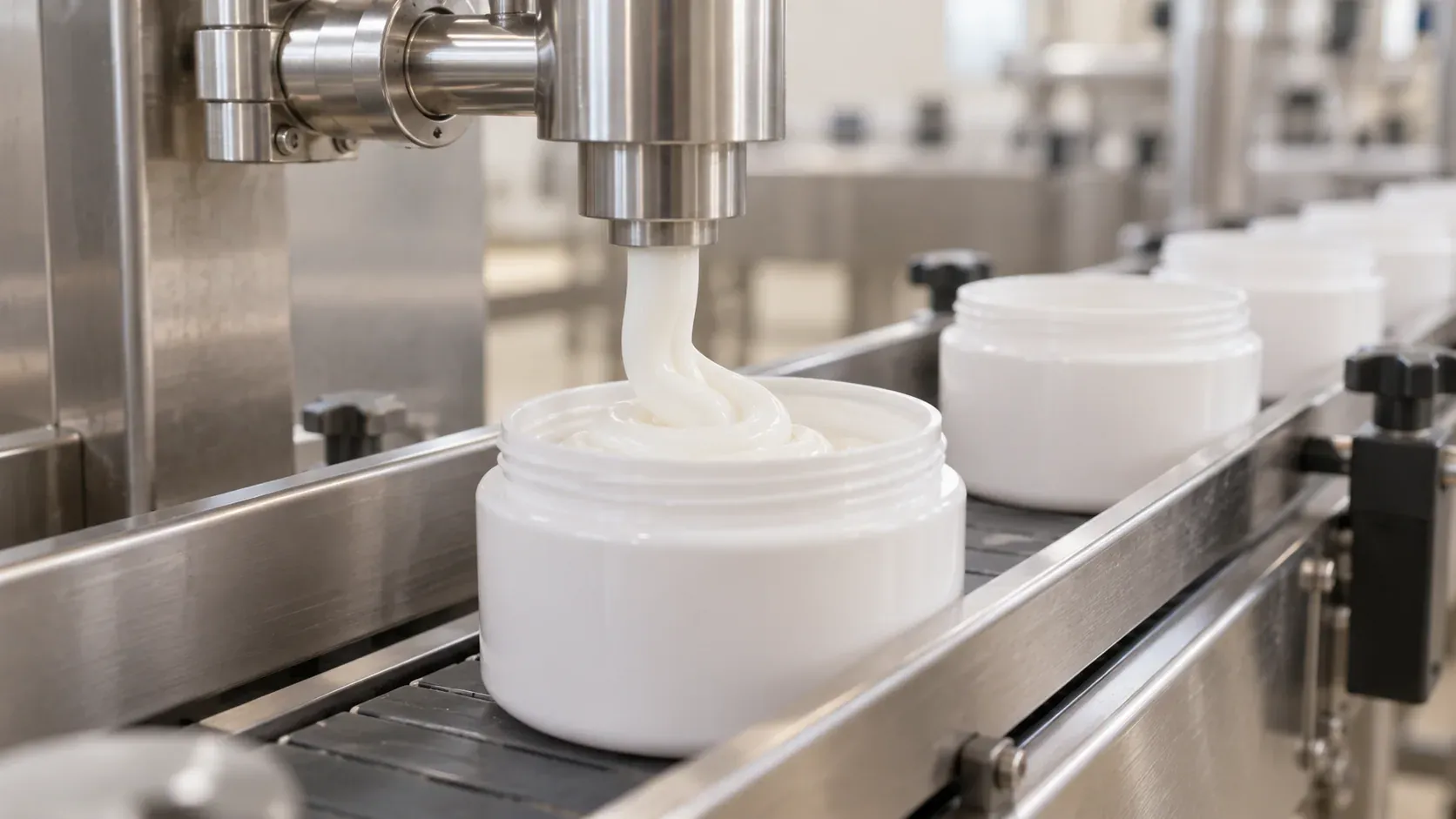
Glyceryl stearate and glyceryl stearate SE should not be treated as a lower-purity and a higher-purity version of the same buying specification. The practical question is which part of the emulsifying and structuring system the actual grade provides. A replacement can change that system even when the ingredient names look similar and the first cream sample looks equally thick.
The actual MOS Glyceryl Stearate SE description identifies a fatty-acid-soap-containing emulsifier primarily for O/W creams. That establishes a candidate to evaluate; it does not establish a universal replacement ratio, pH range or finished-formula stability result. A non-SE MOS counterpart is not assumed here.
Compare formulation roles, not a purity suffix
Ordinary glyceryl-stearate grades can contribute co-emulsification and structure as part of a larger system. For example, Croda describes its Cithrol GMS 40 as a nonionic, low-HLB co-emulsifier, stabilizer and viscosity modifier. BASF describes its Cutina GMS-SE as an anionic self-emulsifying base for O/W emulsions. These named manufacturer examples explain why a function-based comparison is useful; their complete compositions and properties are not specifications for MOS material.
Identify what the incumbent actually does: primary emulsification, co-emulsification, consistency building, or a combination. Also identify the other emulsifiers and structurants already present. Replacing a co-emulsifier with an SE base while keeping every other emulsifier unchanged is a different experiment from replacing the primary emulsifier. Neither should be approved by matching a suffix or a supplied weight.
Keep this separate from O/W and W/O emulsion architectures. An O/W designation describes the continuous phase, not proof that two ingredients will create the same droplet population, consistency or stability in that architecture. Read the complete grade identity; do not collapse Glyceryl Stearate SE and a Glyceryl Stearate/PEG-100 Stearate blend into one specification because they share words.
Treat pH and charged ingredients as trial variables
Fatty-acid soap introduces a question that the INCI name alone cannot settle. Changing acidity can change the ionization of that soap. Charged ingredients and electrolyte loading can also change how an emulsifying system behaves. These are reasons to test the intended formulation, not predictions that a particular MOS grade will fail at a stated pH or with every cationic ingredient.
Hallstar's GMS SE page illustrates grade-specific guidance: it identifies potassium stearate and publishes an application range for its own material. Do not transfer that range, or any supplier's recommended dose, to another offered grade. Obtain the proposed grade's instructions and evaluate the final formula after the specified equilibration, using a pH measurement method suitable for that formula. Record the method and measurement temperature so that apparent drift is interpretable.
Stop point: if the grade's soap system, intended function or applicable incorporation guidance is unknown, the substitution experiment is not yet defined. A cream's acceptable initial appearance cannot fill those information gaps.
Separate an ingredient change from a process change
Keep the accepted incumbent formula as the control. Specify the outcome to preserve before making samples: for example, acceptable separation, rheology and dispensing after the project's agreed conditioning and storage checks. The observation intervals and acceptance limits must fit the finished product; there is no universal shelf-life protocol implied here.
For the first comparison, hold the oil blend, water-phase ingredients, final batch basis, intended pH and compatible processing conditions constant. Use a documented trial dose appropriate to each grade's intended function, rather than assuming equal supplied weight is a valid functional substitution. Record incorporation stage, phase conditions, mixing and cooling history. If the proposed grade requires a different process, test that process as a separate arm where technically compatible. Changing the ingredient and process together without a suitable control cannot identify which caused the difference.
| Observation in the matched comparison | Check next | What it does not establish |
|---|---|---|
| Similar initial thickness, but separation appears during the agreed conditioning checks | Compare the complete emulsifier system, preparation history and a suitable droplet/stability assessment if available | Equal viscosity did not demonstrate equivalent interfacial stability or shelf life |
| A repeatable difference follows an acid adjustment or charged-ingredient addition | Verify pH measurement conditions, the actual addition sequence and compatibility against a matched control | It does not identify a universal SE pH limit or prove the soap is the only cause |
| The result changes when incorporation or cooling changes | Compare the separate process arm and repeat under the defined method | It does not show that the ingredient alone is better or worse |
Apply the same observation methods to control and candidate. A separation or rheology result addresses physical performance under the tested conditions. It does not replace preservation, safety or market-compliance assessment. Stop the trial if its agreed acceptance limits are breached; investigate the defined variable before escalating to a production batch.
Turn the comparison into a grade-specific sample request
For the offered MOS SE candidate, describe the incumbent's function, complete emulsifier system, oil blend, target final pH and relevant ionic ingredients. Share the available process and the outcome that the sample must preserve. Request current composition/INCI information, TDS, SDS and a representative lot COA, plus incorporation guidance for the actual grade. Ask for any required origin or compliance evidence separately; plant-derived wording alone is not a certification or finished-product safety claim.
Use the existing Glyceryl Stearate SE product enquiry for sample and order quantity, packaging and destination. The useful purchasing result is an identified grade and an interpretable qualification plan, not an unverified promise that one similarly named ingredient will replace another.
Technical references
- BASF: Cutina GMS-SE — named SE example and O/W emulsifying role.
- Croda: Cithrol GMS 40 — named non-SE example and co-emulsifying/rheological roles.
- Hallstar: GMS SE — an explicitly identified soap-containing grade; its numerical guidance is not adopted as a MOS specification.