
Preservative Challenge Test for Cosmetics: Prepare the Formula and Sample Dossier
A preservative ingredient and a preserved cosmetic formula need different evidence. Prepare the sample and supplier dossier before changing a preservation system.
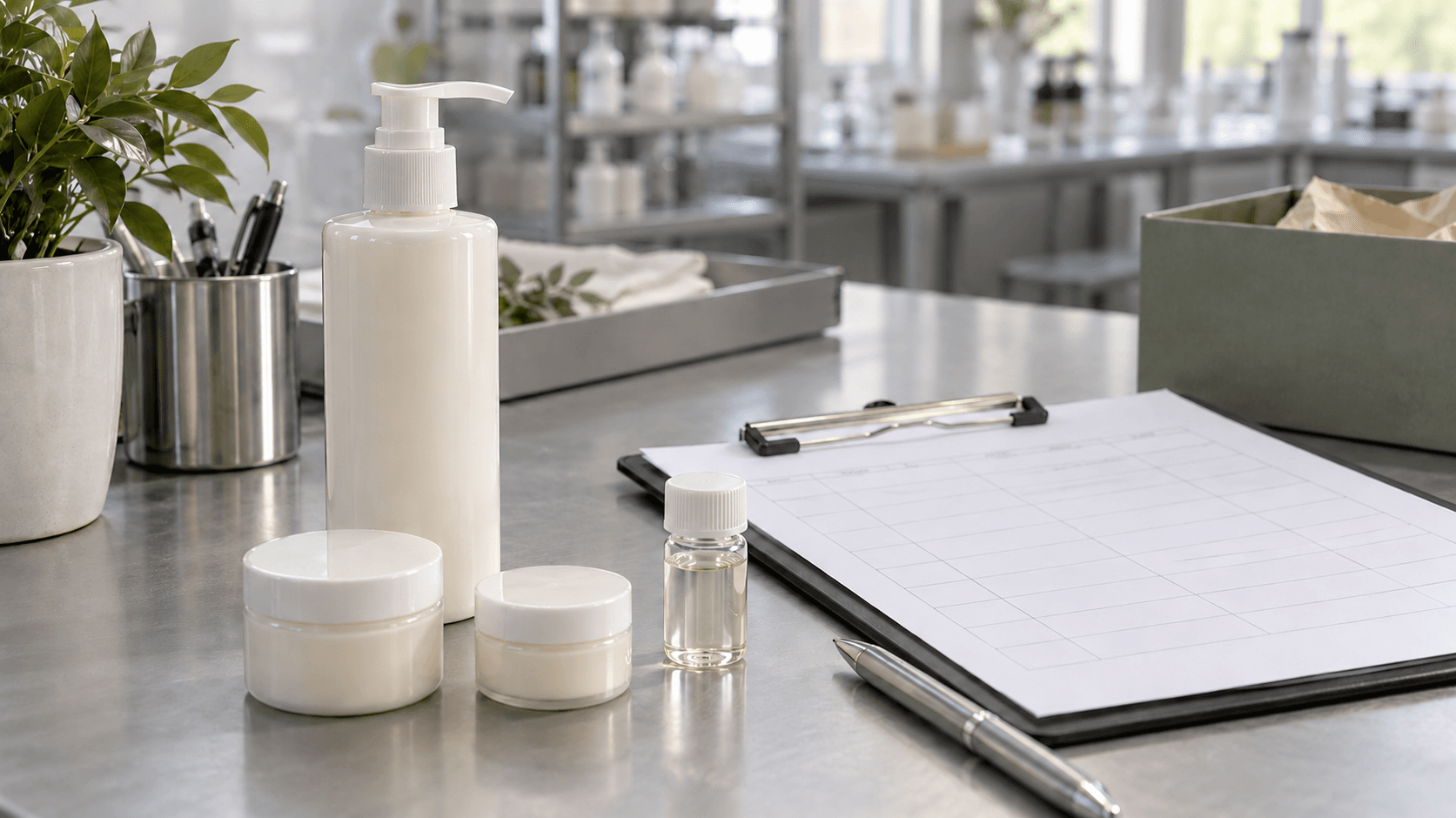
A cosmetic preservative challenge test evaluates preservation in a formulation. It does not turn a raw-material catalogue description into proof that the finished product is protected. For an ingredient buyer, the useful starting point is the exact formula being qualified, the proposed preservative change and the laboratory’s agreed scope.
MOS lists benzyl alcohol and caprylhydroxamic acid as separate raw materials. Their product pages are routes to grade-specific sample and document requests. They do not establish the outcome of a finished-formula test or offer a MOS laboratory testing service.
Clarify which evidence the decision needs
ISO 11930’s published abstract describes evaluation of a cosmetic product’s overall antimicrobial protection using preservation-efficacy test data, microbiological risk assessment, or both. It also distinguishes products assessed as microbiologically low risk. Ask a qualified laboratory or the responsible assessor to determine the applicable method and its scope for the actual product; do not self-declare an exemption from an ingredient name or an oil-rich formula.
Raw-material identity and lot quality, routine microbial quality, and preservation efficacy answer different questions. An acceptable raw-material COA does not demonstrate that microorganisms will be controlled throughout use of the finished formula. Likewise, a routine microbial-quality result should not be presented as a successful challenge test. Agree which evidence supports the intended development or supplier-change decision.
Prepare a dossier that the supplier and laboratory can use
| Input or evidence | Who should confirm it | Procurement purpose |
|---|---|---|
| Formula version and proposed change | Formulator and laboratory | Connect the test to the ingredient change actually being considered |
| Product type, pH and processing conditions | Responsible formulation team | Describe the system in which the candidate material must be evaluated |
| Existing preservative system and candidate role | Formulator and supplier | Avoid assuming that an ingredient or booster is a complete replacement system |
| Sample identity, lot and handling record | Buyer, supplier and laboratory | Keep raw-material and finished-formula samples traceable |
| Offered grade, TDS, SDS and lot COA | Ingredient supplier | Confirm the supplied material rather than another grade’s specifications |
| Test method, scope and acceptance basis | Qualified laboratory and responsible assessor | Obtain a meaningful report for the stated formulation and decision |
| Intended pack and conditions of use | Formulator and laboratory | Agree which real product conditions the evaluation addresses |
Qualify the change rather than rely on an ingredient label
Keep a controlled record of the reference formula and candidate formula. Specify the change being evaluated, the material lot and the sample-preparation conditions. Discuss the sample requirements with the laboratory before shipping. If several formulation or process variables change together, a result cannot automatically explain the effect of one replacement ingredient.
A preservative may have a different role in another formulation. Do not assume that equal additions of two materials give equivalent protection, that a booster can replace a complete system, or that a catalogue description establishes suitability for every application. Review solubility, incorporation and compatibility with the responsible formulation team and request the relevant grade evidence from the supplier.
Keep catalogue claims separate from test evidence
The supplier discussion should establish which material and documents are available for the proposed trial. Descriptions such as broad-spectrum, low irritation or a suggested addition range are not a finished-product challenge-test result. A star rating is not an application approval. This guide does not adopt catalogue dose recommendations or promise an antimicrobial result, safety outcome, certification or market permission.
Have the responsible laboratory explain the report’s method, scope and limitations. This article provides no organism list, test schedule, reduction threshold or universal pass criterion. Use the agreed method and competent assessment rather than reconstructing a procedure from a purchasing guide. Changed formulas or use conditions require their own assessment.
Request a traceable ingredient sample and quotation
Use the benzyl alcohol Product page for a grade-specific request, or the caprylhydroxamic acid Product page when that ingredient is part of the proposed system. Provide the application and formula type, relevant pH and processing context, current preservation system, intended change and sample requirements. Include quantity, annual demand, pack requirements and destination; request current TDS/SDS, lot COA and sample identification. Agree the test and acceptance plan with the laboratory before accepting the material. Supplier confirmation remains necessary for the offered grade and documents.
Cosmetic preservation qualification FAQ
Does a benzyl alcohol COA prove that my cosmetic formula passes a challenge test?
No. It addresses the identified raw-material lot. Finished-formula preservation needs the appropriate test or risk-assessment evidence for the actual formula and conditions.
Is routine microbial-quality testing the same as a preservative efficacy test?
They answer different qualification questions. Ask the laboratory to identify the method and what the report demonstrates; do not relabel one result as the other.
Can I replace a preservative with the same amount of another ingredient?
Do not assume equivalence. Confirm each ingredient’s role, offered grade and formulation compatibility, then assess the complete candidate formula with the responsible technical team.
What should an ingredient RFQ include before a challenge-test programme?
Application, formula type and relevant pH/process conditions, current preservative system, proposed change, grade and sample needs, quantity and annual demand, pack requirements, destination and TDS/SDS/lot COA requirements.