
Trimethylsiloxysilicate: Qualify the Resin and Carrier Together
Identify the supplied MQ-resin form,screen its carrier and keep premix observations separate from finished-film acceptance.
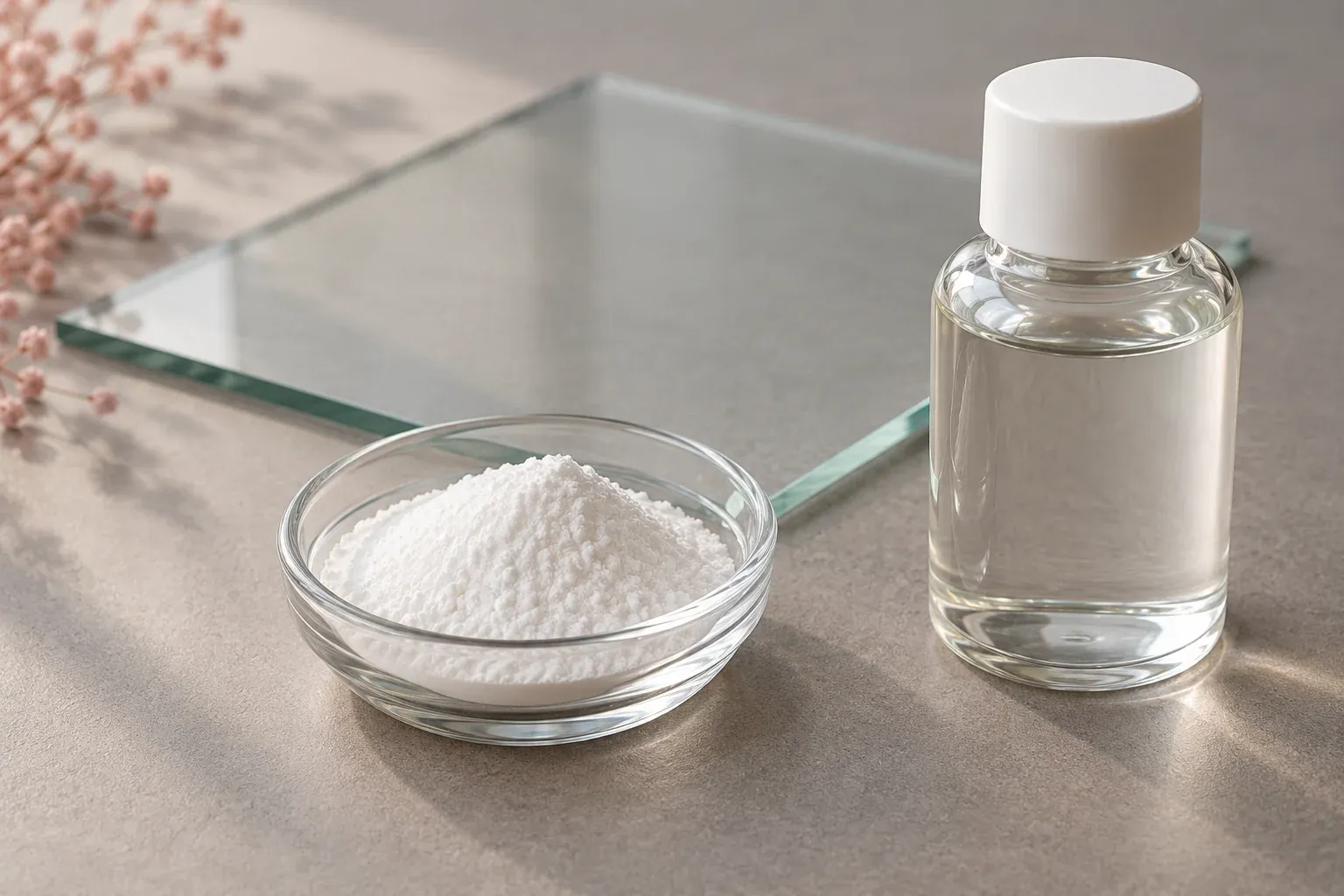
Trimethylsiloxysilicate names a silicone MQ resin ingredient; it does not specify a universal solvent, a supplied concentration or a finished makeup result. A useful selection starts with the material actually delivered, then follows it through a documented premix and a finished-formula assessment.
The offered MOS trimethylsiloxysilicate is described as powder. Its catalogue solids row is ≥99.0% under 120°C/2 h conditions. That condition-qualified residue value is not, by itself, molecular purity, proof of complete dissolution in a chosen carrier or a wear-performance guarantee.
The INCI name does not specify the supplied form
Confirm whether the sample is a dry resin, a neat liquid grade or a resin already supplied in a carrier. Siltech's MQ-resin bulletin provides examples of neat and carrier-containing grades under the same INCI, including grades supplied at 70% in isododecane. These illustrate why supplied form matters; their solvent compatibility, use levels and performance are not assigned to the MOS powder.
Record the actual resin grade, lot, declared carrier and solids method. Do not mistake a blended material's convenient handling viscosity for an intrinsic property of an unspecified dry resin. For carrier identity and grade questions, the existing dimethicone versus cyclopentasiloxane guide addresses a different decision; verify the offered carrier's own documents before use.
Build a small, documented dissolution screen
Choose candidate carriers using the offered grade's current TDS/SDS and formulation constraints. Agree a safe handling and mixing procedure with the responsible formulation team. Record resin and carrier masses, addition sequence, temperature, agitation, mixing duration and hold conditions. This guide prescribes no universal solvent, heating temperature or mixing time.
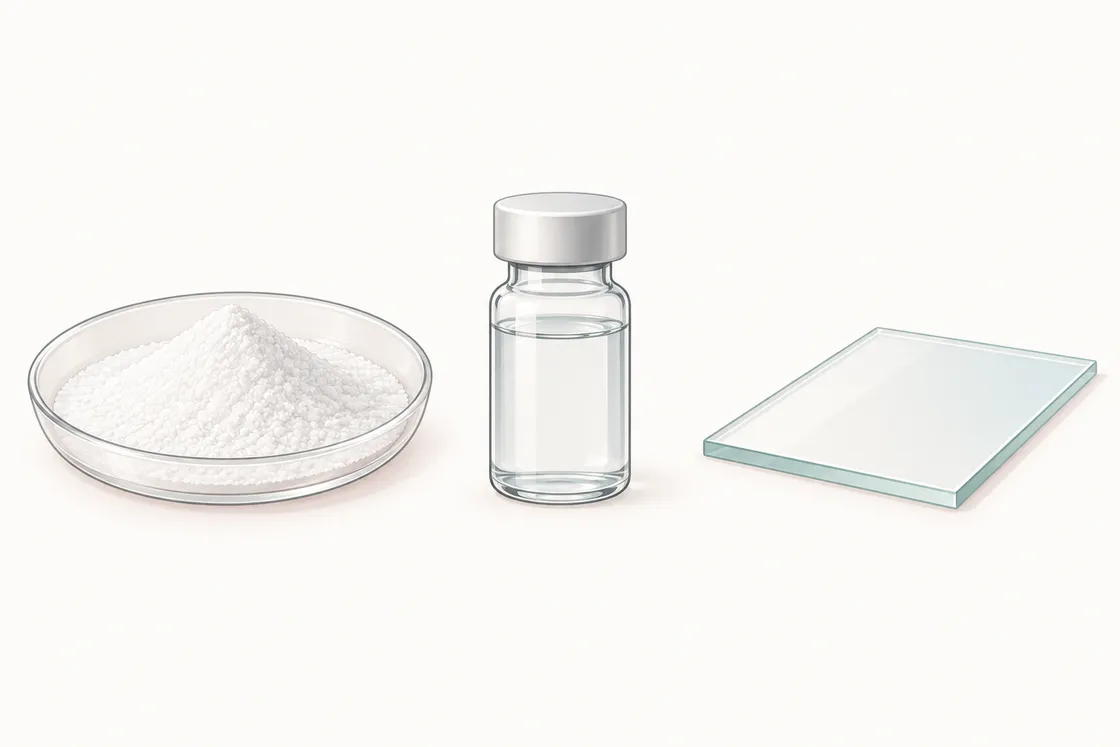
Observe whether visible particles remain, whether the premix is uniform and how it changes during the agreed hold. A clearer fresh sample is not proof of complete molecular dissolution or later formulation stability. Persistent particles, sediment, separation or an unexplained change should stop advancement until the cause and method are understood.
Keep the first screen interpretable. Changing carrier, resin concentration and mixing conditions together makes it difficult to identify why two samples differ. Document one controlled change against the reference where practical. The adjacent illustration separates material, premix and film stages; it does not depict a successful solubility experiment.
Rebalance resin solids and carrier together
Compare supplied masses only after identifying the resin-solids basis. In a hypothetical calculation, 10 kg of a material containing 70% resin contributes 7 kg resin and 3 kg carrier. Replacing it with 10 kg of dry resin would change both quantities. A nominal resin match would require accounting for the resin fraction and the remaining carrier separately, followed by a real formulation trial.
The 70% example is not a recommended MOS formulation or an approved substitution. A catalogue solids result under a particular drying condition may not equal the resin-content definition used for another blend. Confirm the definitions before applying a mass balance.
| Check | Record | Do not infer |
|---|---|---|
| Supplied form | Resin grade, lot, carrier declaration and solids basis | Same INCI means equal supplied dose |
| Premix | Masses, mixing/temperature/hold history and observations | Fresh clarity proves all later stability |
| Application | Actual formula, substrate, applied amount and dry-down conditions | Carrier behaviour alone establishes film performance |
| Purchase acceptance | Agreed method, sample result and relevant grade documents | A generic ingredient name proves a performance claim |
Approve the premix and the finished film separately
A satisfactory premix is an intermediate result. Evaluate the intended complete formula under an agreed application and conditioning protocol: uniformity, drying, appearance and the specific film properties that matter to the project. Keep application amount or film thickness, substrate and observation conditions comparable. Test the intended pack separately where relevant.
Do not infer waterproofing, transfer resistance, SPF or regulatory compliance from the resin name or this illustration. Those require the applicable finished-product evidence. A successful result in one carrier or formula is not a universal compatibility statement.
Request a grade-specific sample
Use the actual resin Product to request current grade documents and a sample. State supplied form, candidate carrier identities, intended formulation and pack, resin-solids target, process constraints and acceptance criteria. Include quantity, packaging and destination.
A useful recommendation explains the proposed grade and the evidence still needed. It does not replace a documented dissolution screen and finished-formula decision with a generic claim that all MQ resins behave alike.